
Loading...
Serving Amherst, MA and surrounding areas. (413) 416-9023
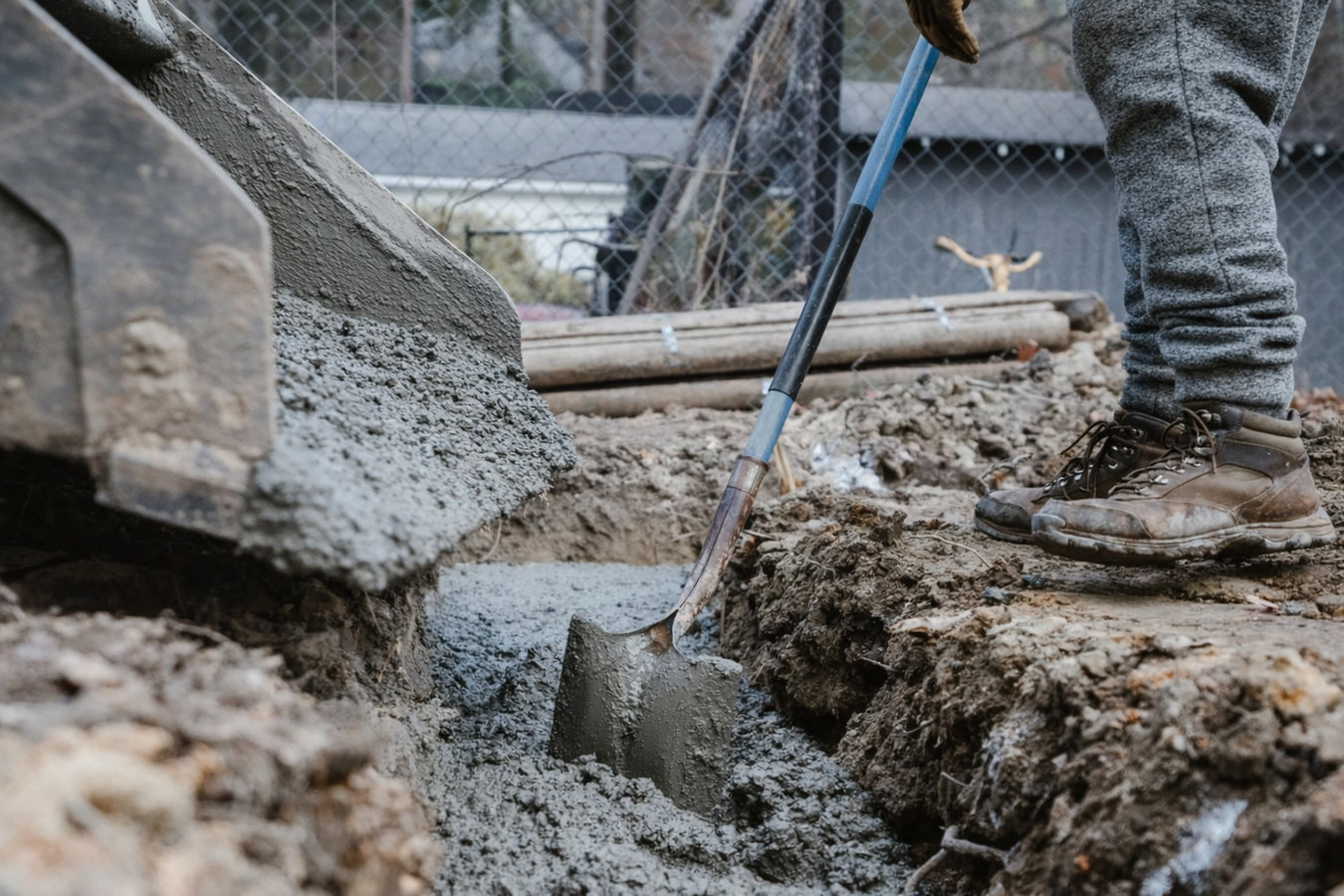
A deck, addition, or porch is only as solid as what holds it up. We dig below the frost line, handle the permit, and get the inspection done before any concrete goes in.
Concrete footings in Amherst, MA are the wide, buried concrete bases that hold up decks, additions, porches, and outbuildings - dug at least 48 inches below grade to stay below the frost line, inspected before the pour, and ready for framing in one to three days of active work, though the full process from first call to a footing ready to build on typically runs two to four weeks including permit review.
Homeowners in Amherst reach out about footings for a few different reasons: they are planning a new deck or addition and need the groundwork done before the builder arrives, they have an existing structure that is showing signs of settling, or they discovered during a home inspection that previous footings were undersized or never permitted. The Pioneer Valley frost line - at least 48 inches in most of Hampshire County - means this is not a job where shallow shortcuts are forgivable. If you are planning foundation work alongside footing installation, pairing this with foundation installation on the same project saves time and keeps the scope under one contractor.
For older Amherst homes that may need more extensive structural work, we also handle foundation raising when settling has progressed beyond what new footings alone can address. Getting both assessments at the same site visit gives you a clearer picture of the full scope before any decisions are made.
If one corner of your deck is sitting lower than the others, or a gap has opened between the deck frame and your house, the footings may have shifted. In Amherst, this is often caused by footings that were not dug deep enough to stay below the frost line - they get pushed up each winter and do not always settle back to the same position.
Diagonal cracks running from the corners of basement windows or doors, or stair-step cracks in a block wall, often point to uneven settling in the footings below. Amherst has many older homes with footings that were undersized by today's standards. A crack that is growing wider over time is more urgent than one that has been stable for years.
Any new structure that will be attached to your home or carry significant weight needs proper footings before framing begins. If you are in the planning stage, now is the right time to talk to a concrete contractor - before your builder shows up expecting footings to already be in. Getting them right from the start is far less expensive than fixing a settled structure later.
When footings shift, the frame of the house can rack slightly out of square. This often shows up first as doors or windows that no longer close the way they used to, especially after a winter with heavy frost. It is not always a footing problem, but if you notice this pattern it is worth having the foundation area evaluated.
We install concrete footings for decks, additions, porches, garages, and outbuildings across Amherst and the surrounding Pioneer Valley. Every project begins with a site visit to assess soil conditions, check for rock or wet ground, confirm access for equipment, and determine what depth is appropriate for your specific location. We handle the building permit through the Town of Amherst Building Department and coordinate the pre-pour inspection - the town inspector approves the depth and sizing before any concrete goes in, which protects you. For projects that involve both footings and a full foundation, we can bundle that work with foundation installation under one contract and one mobilization.
Homes in Amherst's older neighborhoods - many built decades before current depth requirements were standard - sometimes need a combination of new footings and remediation work on what is already there. If a site visit reveals that foundation raising is part of what the structure needs, we will be direct about that in the assessment rather than beginning work and discovering it midway through. We quote what the job actually requires, not what makes the number look smaller up front.
Best for homeowners planning a new attached or freestanding deck, porch, or pergola who need the concrete work done before framing begins.
Best for homeowners adding a room, sunroom, or attached garage to an existing house who need load-bearing footings tied into the existing structure.
Best for sheds, garages, workshops, or accessory dwelling units that need permanent footings below the frost line.
Best for homeowners or buyers who have identified settling, cracking, or previously unpermitted footing work on an existing structure.
Amherst sits in Hampshire County in western Massachusetts, where the ground regularly freezes to 48 inches or more in a hard winter. That frost line requirement is not a suggestion - a footing above it will be pushed up and down by freeze-thaw movement every year until whatever it supports cracks or leans. The town's housing stock compounds this challenge: Amherst has a large share of homes built before 1960, many in the neighborhoods near UMass Amherst, with footings that were sized to older standards or were never inspected. When you add onto one of these homes, a contractor needs to assess what is already there before assuming the existing footings can carry additional load. We do that assessment at the site visit, before any quotes are finalized. Amherst, MA homeowners who have been through a renovation on an older property know this step cannot be skipped.
The Pioneer Valley's glacial soils add another layer of complexity. Many Amherst yards sit on a mix of clay, silt, and glacial till that can include boulders or ledge rock a few feet down. Rocky ground is common enough in this region that any contractor who does not mention it in their estimate probably has not dug here before. We work regularly throughout the area, including in Hadley, MA where similar soil conditions apply, and we factor that variability into our quotes rather than presenting it as a change order after work starts. The Massachusetts State Building Code sets the minimum requirements for footing depth and sizing, and we build to those standards as the floor, not the ceiling.
Describe what you are building and where the footings need to go. You will hear back within one business day. We will ask a few questions and set up a site visit - footing costs vary too much from one yard to the next to quote accurately over the phone.
We look at the site, assess soil conditions, check for rock or wet ground, and confirm equipment access. You get a written estimate that covers excavation, permitting, the pour, and any soil challenges we identified - before you commit to anything.
We handle the building permit with the Town of Amherst Building Department. The inspector approves the excavation depth and sizing before any concrete goes in. This takes one to two weeks during busy spring season, so factor that into your project timeline.
Active digging and pouring takes one to three days. After the pour, the concrete needs at least a week before framing loads the footing. We walk you through the finished work and coordinate with your builder on when they can start.
We handle permits, inspection coordination, and soil assessment - and we respond within one business day.
(413) 416-9023In Amherst, that means at least 48 inches - sometimes more depending on the site. We do not negotiate with the frost line. A footing that falls short of depth will shift with every western Massachusetts winter until the structure above shows it. This is a non-negotiable part of how we work, not a premium add-on.
Glacially deposited soils mean boulders, ledge rock, and dense till are common in Amherst yards. We assess your specific site before quoting and tell you upfront how we handle rock if we encounter it. You do not discover this as a change order after the excavator is already on your property. See the American Concrete Institute for footing standards in variable soil conditions.
We apply for the Town of Amherst permit and coordinate with the inspector to verify depth and sizing before any concrete goes in. This is how the system is designed to work, and it protects your investment. A job done without a permit and inspection can create real problems at resale or on an insurance claim.
Many Amherst homes were built decades before current depth requirements were standard. If you are adding onto one of these properties, we assess what is already there first - so we are not building new load on footings that cannot carry it. That assessment is part of every site visit, not a separate consultation.
Every footing project we complete in Amherst is inspected before the pour and built to hold up through the same winters that have been testing these properties for decades. That is the standard we hold every job to, whether it is a three-footing deck or a full addition foundation.
When settling has progressed beyond what new footings alone can fix, foundation raising corrects the structural position before new work is built on top.
Learn MoreFor projects that need a full foundation alongside footings, we can bundle both under one contract and one site mobilization.
Learn MoreReach out today and we will respond within one business day with next steps for your project.