
Loading...
Serving Amherst, MA and surrounding areas. (413) 416-9023
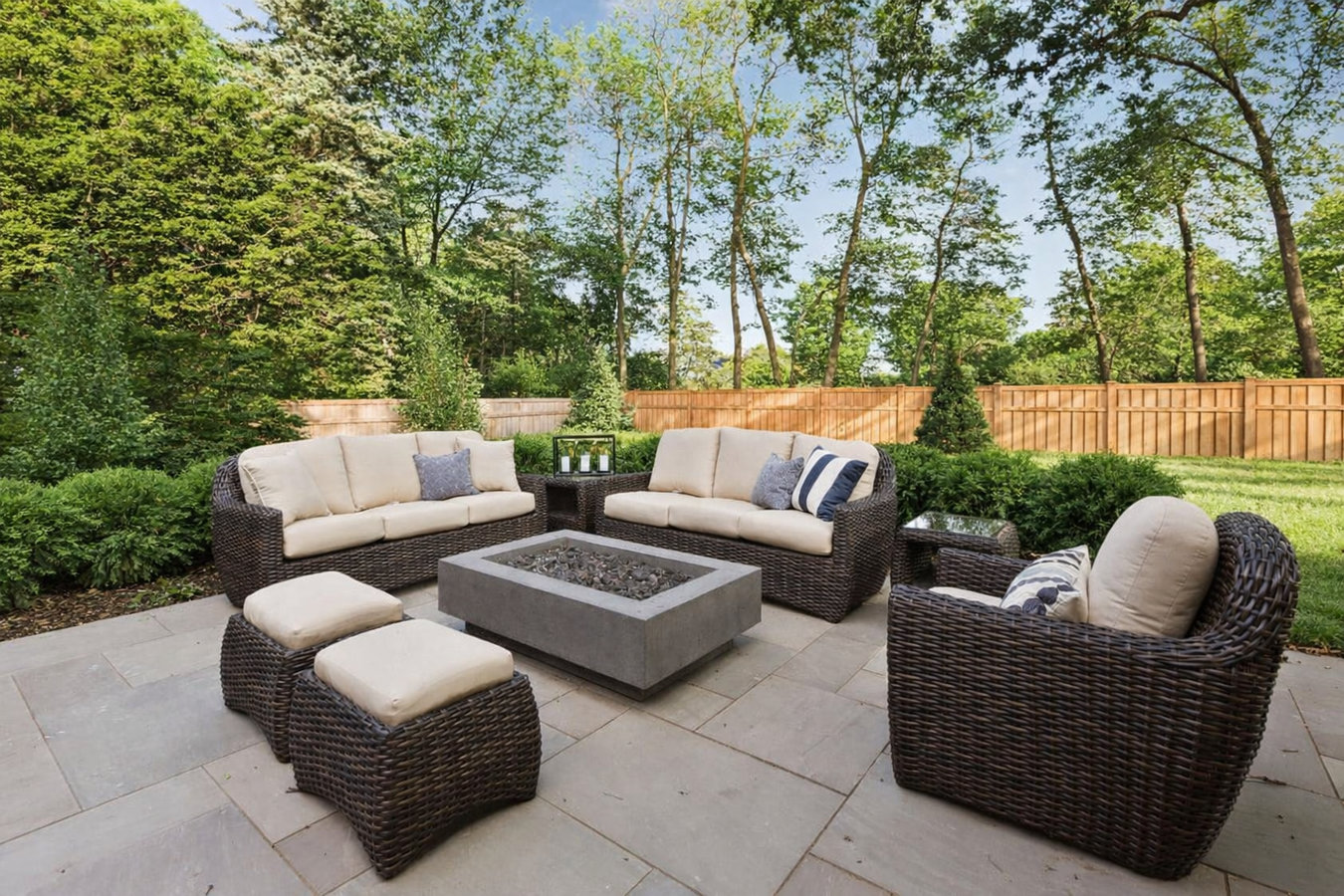
A concrete patio should give you usable outdoor space, not a cracking slab that collects water by the foundation. We build patios graded for drainage and set on a base designed for Amherst winters.
Concrete patio construction in Amherst means removing existing grass or old concrete, excavating to a stable base, laying compacted gravel for drainage, and pouring a four-inch slab - most residential patios take one to two days to form and pour, plus seven days before you put heavy furniture on it.
Amherst homeowners often reach out after noticing cracks running diagonally across an older patio slab, or after water starts pooling near the back door after a storm. Both problems usually trace back to a patio that was not built with proper drainage slope or base preparation. The Pioneer Valley's freeze-thaw cycles and glacial soils - which include clay pockets that expand when frozen - make base work especially critical here. If you want to take the finished look a step further, our stamped concrete services can add stone or brick patterns to the same slab.
We work on patios throughout Amherst and across Hampshire County, from tighter backyards near the university to larger lots in South Amherst. Every project starts with a free on-site visit and a written estimate before any work begins.
If your backyard is grass or dirt right up to the back door, you lose usable space every time it rains. A concrete patio gives you a stable, dry area for furniture and a grill that holds up through Amherst's wet springs and muddy falls.
Hairline cracks along cut lines in a concrete slab are normal. But diagonal cracks across the surface, or sections that have shifted up or down relative to each other, signal a base failure. In Amherst's freeze-thaw climate, this type of damage gets worse every winter.
If water sits close to your house after a storm, an improperly sloped or deteriorating patio may be directing water toward your foundation. This is common in older Amherst homes where the original patio has settled. Left alone, it leads to basement moisture problems.
A pitting or peeling concrete surface - called spalling - is a sign the top layer has been damaged by freeze-thaw cycles or road salt tracked in from shoes. Once spalling starts, it tends to spread, and the surface becomes a tripping hazard.
Every patio we build starts with excavation to remove existing grass, soil, or old concrete, followed by a compacted gravel base that drains properly and resists seasonal shifting. The slab is poured at four inches for standard residential use, with a slight slope away from your house built in so water moves away from your foundation. Control joints are cut before the concrete fully hardens so any natural cracking follows predictable lines. Finish options range from a basic broom texture to exposed aggregate or stamped patterns, all applied while the concrete is still wet.
For homeowners who want to extend the outdoor space to a pool area, our concrete pool decks follow the same base preparation and drainage standards. All projects include a written estimate covering every line item - excavation, base, pour, finish, and cleanup - with no items added after the fact.
A clean, textured surface that provides grip when wet - the most affordable option for any yard.
Reveals the natural pebbles in the concrete mix for a speckled, decorative look without a premium price tag.
Patterns that mimic stone, brick, or slate - suited for homeowners who want a more finished aesthetic.
Designed for yards where water currently pools near the house, redirecting runoff away from the foundation.
Amherst sits in USDA Hardiness Zone 6a, and the Connecticut River Valley's glacial soils include a mix of sandy outwash and clay-heavy pockets left by the last ice age. Clay soils hold water and expand when frozen - which can push a slab up or cause it to settle unevenly if the base was not prepared correctly. The Pioneer Valley's freeze-thaw cycles also mean that a patio poured on an inadequate base will start to show cracks and settling within a few winters. The Portland Cement Association recommends specific mix designs and curing practices for cold-climate patio construction, and we follow those standards on every project.
Amherst's construction season runs roughly late April through October, and contractors book up quickly in spring - especially because the university and rental market drive demand for larger commercial projects during the same window. Homeowners in Hadley and South Hadley face the same seasonal constraints and similar soil conditions. Reaching out in February or March gives you the best access to experienced crews and flexibility on timing. Parts of Amherst near the Mill River also fall within FEMA flood zones, where a permit from the Amherst Building Department may be required before work begins.
Call or submit the form and we will respond within 1 business day. You do not need to have everything figured out before you reach out - the on-site estimate visit is the right place to talk through size, finish, and budget.
We visit your Amherst property, measure the space, assess the slope of your yard, check what is currently there, and look at the soil. We will tell you upfront whether your project needs a permit. You receive a written quote covering every line item.
The crew removes existing grass, old concrete, or soil, then excavates to a stable depth and lays compacted gravel. This base work is the most important part of the job and determines how well the patio holds up over time.
Concrete is poured, leveled, and textured in one session. Control joints are cut before it hardens. Plan on keeping vehicles and heavy furniture off the slab for at least seven days - in cool Amherst spring weather, we may leave protective coverings on longer.
We respond within 1 business day. After you submit, someone from our office will call to schedule a free on-site visit at your Amherst property - no obligation, no sales pressure.
(413) 416-9023The Massachusetts Home Improvement Contractor program requires registration for residential work above a set dollar threshold. We are registered and carry full liability insurance on every project. You can verify contractor registration through the Massachusetts Office of Consumer Affairs and Business Regulation.
The quote you approve covers excavation, base material, the pour, the finish, cleanup, and any permit costs. No line items appear after the job starts. You know the exact number before any work begins on your property.
We assess the soil at your specific site before quoting. Clay-heavy soils common in parts of Amherst require deeper excavation and more compacted gravel than sandy areas. We account for that upfront rather than cutting corners that show up as cracks in year two.
We work throughout Amherst and Hampshire County - from backyards near campus to larger rural lots in South Amherst and North Amherst. We know the building department's permit requirements, the local soil conditions, and the scheduling pressures that come with the short construction season here.
These are the things Amherst homeowners tell us they wish they had asked about before hiring someone else and starting over. You can skip that experience. Call (413) 416-9023 or use the estimate form above.
Upgrade your outdoor surface with decorative stamped patterns that mimic stone, brick, or slate.
Learn MoreDurable, slip-resistant concrete pool decks designed for poolside safety and long-term performance.
Learn MoreSpring booking in Amherst fills up fast - reach out now so your patio is ready before summer slips away.