
Loading...
Serving Amherst, MA and surrounding areas. (413) 416-9023
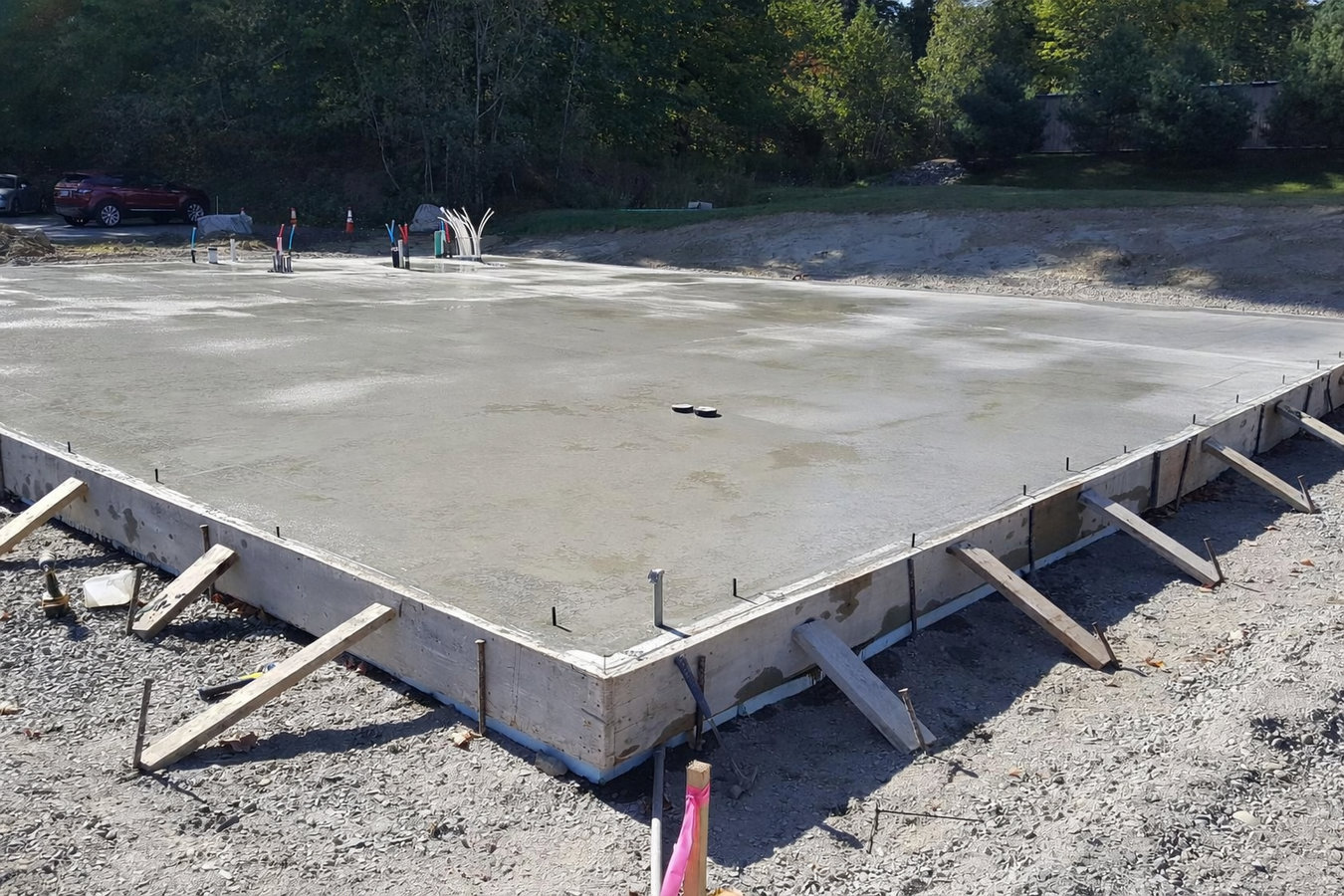
Your slab has to survive deep frost, glacial soil, and decades of freeze-thaw cycles. We build it right the first time - fully permitted and inspected.
Slab foundation building in Amherst means pouring a single thick layer of concrete directly on prepared ground that serves as both the floor and the structural base of your structure, with perimeter footings that extend below the four-foot frost line Massachusetts requires. Most residential slab projects - from garage additions to accessory dwelling units - involve one to three days of site prep and a single day for the pour, with a week of curing before framing begins.
If you are building on a property with Pioneer Valley glacial soil - sandy loam, clay pockets, or buried ledge rock - the preparation work under that slab matters more than the concrete itself. A compromised base means a cracked, shifting floor within a few years. That is the problem we prevent. Many homeowners also pair their slab project with foundation installation when the structure calls for full basement walls alongside the floor slab.
Permits are required for all new slab foundation work in Amherst, and we handle the application and inspections from start to finish so you never have to navigate the Building Department on your own.
Small hairline cracks in a concrete floor are common and usually not a concern. But cracks wider than a quarter-inch, cracks where one side is higher than the other, or cracks that seem to be getting longer are a sign the slab may be moving. In Amherst, clay-heavy Pioneer Valley soil shifts with seasonal moisture changes and can accelerate this.
When a slab foundation settles unevenly, it can cause the frame of your house to shift slightly. The first place most homeowners notice this is in doors or windows that suddenly stick, drag, or no longer latch. If this is happening in multiple places at once, it is worth having a foundation contractor look at the slab before the problem gets worse.
A properly built slab includes a moisture barrier between the concrete and the ground. If that barrier was not installed correctly - or if the slab predates modern moisture protection practices - you may notice damp spots, a white chalky residue, or a musty smell at floor level. In Amherst's climate, spring snowmelt and heavy rain can make a compromised moisture barrier a serious problem.
If you are adding a garage, an accessory dwelling unit, a workshop, or a home addition in Amherst, you need a foundation before any framing can begin. A concrete slab is often the right choice for single-story additions and detached structures where a basement is not needed. A local contractor can walk you through the right foundation type based on your specific site.
Every slab project starts with a site visit, because Amherst soil varies too much for accurate phone quotes. We assess your ground conditions, review your building plans, and give you a written estimate that includes site preparation, forming, reinforcing steel, the moisture barrier, the pour, and the permit. No line-item surprises after you sign. When your project also calls for concrete footings for posts, columns, or load-bearing points, we handle those as part of the same scope so everything is coordinated from one crew.
We pour slabs for garages, home additions, accessory dwelling units, workshops, and shed foundations throughout Amherst and the surrounding Pioneer Valley. The pour is one day; the preparation work - grading, compaction, forming, and inspection - is what determines whether that slab holds up for twenty years or starts cracking in five.
Suits homeowners building a new garage, addition, or accessory dwelling unit in Amherst.
Suits properties where an old or crumbling base needs to be removed and rebuilt to current code.
Suits load-bearing structures where walls and posts transfer weight into the perimeter footings.
Suits Amherst sites where spring snowmelt or high water tables make vapor protection essential.
Amherst sits in the Pioneer Valley on land shaped by glaciers. The soil here is a mix of sandy loam, clay pockets, and - frequently - buried boulders and ledge rock just below the surface. A contractor who has not worked in this area before will often be surprised by what they find once the excavator starts digging. We are not surprised. We have encountered ledge on properties throughout Amherst, and we assess your site carefully before we commit to a price. The Massachusetts building code also requires perimeter footings to extend below the frost line, which means deeper excavation here than in most other states - more concrete, more labor, and a more involved permit process. Homeowners in Hadley face similar soil conditions along the Connecticut River floodplain, and those in Northampton often deal with the same glacial deposit variability.
The construction season in Amherst is real and limited. Concrete poured in near-freezing temperatures does not cure properly, and a pour that goes wrong in October can mean a compromised slab for the life of your structure. We plan every project around the weather, not just the calendar, and we book our schedule with enough runway to let the concrete cure the way it should. The Massachusetts State Building Code sets the frost depth and reinforcement standards that govern all foundation work in the state - and our work is inspected against those standards before we backfill.
We will ask a few basic questions about your project - size, location, and what you are building - and schedule a site visit before giving you any numbers. We reply within one business day.
We visit your property, assess the soil and access, and give you a written quote. Once you are ready to move forward, we apply for the Amherst Building Department permit - you do not have to navigate that process yourself.
After the permit is approved, we excavate, compact a gravel base, lay a moisture barrier, and set reinforcing steel. A building inspector visits before the pour to confirm the setup meets code.
We pour and finish the slab, then protect it during the curing period. A final building department inspection closes out the permit. We hand you the signed paperwork before we collect final payment.
We reply within one business day. No pressure, no obligation - just a straight answer about what your project involves.
(413) 416-9023We design every slab with perimeter footings that extend below the four-foot frost line western Massachusetts demands. That depth is not optional - it is what keeps the freeze-thaw cycle from cracking your foundation over time.
We file the permit application with the Amherst Building Department, schedule all required inspections, and hand you the signed paperwork when the job is done. You never have to chase paperwork or wonder whether the work is legal.
The Pioneer Valley's glacial soils mean every site is different. We assess your ground conditions before we quote, so the number we give you reflects your actual site - not a best-case assumption that changes once the excavator arrives.
Our work follows practices established by the American Concrete Institute, a leading authority on concrete construction. You can review their slab and foundation guidelines at concrete.org.
Every one of these commitments comes from working in Amherst specifically - not just western Massachusetts in general. When you call us, you are talking to a contractor who has poured slabs in Pioneer Valley soil and knows what the Amherst Building Department expects before, during, and after the pour.
Full foundation installation for new homes and replacement projects, including basement and crawl space walls.
Learn MoreIndividual concrete footings for posts, columns, decks, and load-bearing structures that need a solid base.
Learn MoreLocal concrete crews fill their schedules fast once the ground thaws - reach out now so your project is not pushed to fall.